fbpx

SeaClass

The Maritime Classroom

Find your sea story in a Mystic Seaport Museum SeaClass. A variety of classes are offered in-person at the Museum, for a hands-on learning experience, and digitally, designed to inspire curious minds, near and far, through episodes specially curated by Museum experts.

In-person learning

Choose from hands-on classes in open-hearth cooking, letterpress printing, woodworking, knot tying, astronomy, music, scrimshaw, racing tactics, and more.

Digital learning

Season 1 of SeaClass immerses us in the 19th-century whaling industry through stories, artifacts, and expert-led sessions that explore the impact of whaling then and now. SeaClass Season 2 has been confirmed! Stay tuned for the release later this year.

IN-PERSON LEARNING

Check back for Fall 2026 classes.

This four-week, on-shore, classroom-based course introduces students with a basic familiarity with sailing to the rules, strategies, theories, and techniques that support competent racing. The curriculum is progressive—beginning with foundational topics such as right-of-way rules and race starts, then progressing to advanced racing strategy. If you are an adult or young adult who has completed an introductory sailing class and want to learn the fundamentals of racing, this course is for you!

  • Prerequisite: Previous completion of an introductory sailing class
  • 4-week class
  • Wednesdays, March 4, 11, 18, 25
  • 5:30–7:30 p.m.
  • Ages 12 and up
  • Members $120 | Non-Members $150

Food and the Immigrant Experience: Ireland

Discover the flavors and traditions Irish immigrants brought to 19th-century America. Cook traditional recipes over the open hearth, explore their cultural significance, and enjoy a taste of history in honor of St. Patrick’s Day.

  • 1-day class
  • Friday, March 13 SOLD OUT
  • 5:30–8:30 p.m.
  • Ages 16 and up
  • Maximum class capacity is 6 students.
  • Members $76 | Non-members $95

Fish Fry

Follow the story of New England’s cod fishery from sea to table. Learn about the life of fishermen, then prepare codfish cakes over the open hearth in the Buckingham-Hall house using traditional techniques—served hot and fresh from the pan.

  • 1-day class
  • Friday, March 27 SOLD OUT
  • 5:30–8:30 p.m.
  • Ages 16 and up
  • Maximum class capacity is 6 students.
  • Members $60 | Non-members $75

Letterpress Coaster Workshop 

Just in time for St. Patrick’s Day! Design and print your own drink coasters on our 19th-century hand press while learning the art of letterpress printing. Perfect for adding a historic touch to your next gathering—just in time for St. Patrick’s Day! No experience required.

  • 1-day class
  • Saturday, March 14 SOLD OUT
  • 9:00 a.m.–12:00 p.m.
  • Ages 21 and up
  • Maximum class capacity is 4 students.
  • Members $70 | Non-members $85

DIGITAL LEARNING

Introducing SeaClass: Digital Learning, the digital series that will inspire curious minds, near and far, through episodes specially curated by our museum experts. Season 1 immerses us in the 19th-century whaling industry through stories, artifacts, and expert-led sessions that explore the impact of whaling then and now.

All episodes of Season 1 are now streaming on YouTube.
Season 2 has been confirmed! Subscribe and turn on notifications to be alerted when it’s released.

Why did people hunt whales—and what impact did it have? Join Michael Dyer, Curator of Maritime History, for a deep dive into the motivations and legacy of the whaling industry.
Discover the often-overlooked stories of women in whaling history—their roles, contributions, and challenges. Featuring Maria Petrillo, Director of Interpretation. 
What parts of a whale were used—and how? Join Professor Jim Carlton of Williams College as we examine whale anatomy and its many historical applications.  
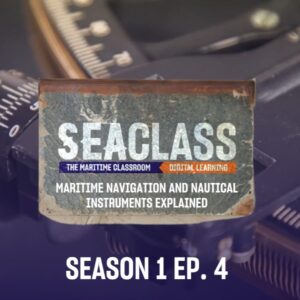
How did sailors find their way at sea? Learn about the tools and techniques of maritime navigation with Brian Koehler, Associate Director of the Treworgy Planetarium.  
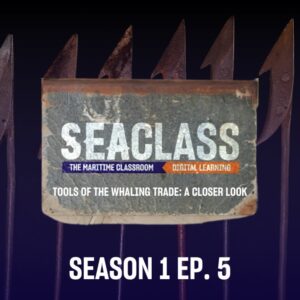
Get an up-close look at the tools used by whalers at sea. Michael Dyer, Curator of Maritime History, breaks down how these tools worked—and what they tell us today.  
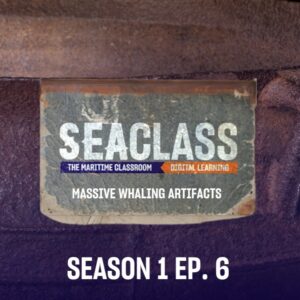
Step aboard as we explore large-scale artifacts from the whaling era—ship parts, tools, and more—with Michael Dyer, Curator of Maritime History.
Search