fbpx
Categories
News

“The Vikings Begin” To Explore Origins of Viking Culture

Image credit: ©Gustavianum, Uppsala University Museum

A modern-day fascination with Vikings and Viking culture will be satisfied by the Saturday, May 19th opening of The Vikings Begin: Treasures from Uppsala University, Sweden, at Mystic Seaport. The exhibition will bring artifacts from one of the world’s finest early Viking-age collections outside of their home in Sweden for the first time. It will be the international debut for the exhibition.

Priceless treasures, including helmets, shields, weapons, glass, and other artifacts dating as early as the 7th century, are included in this collection from Gustavianum, Uppsala University Museum in Sweden, Scandinavia’s oldest university.

The Vikings Begin is a wonderful opportunity for people to tap into their fascination with all things Viking, and be able to expand the scope of understanding about Viking and pre-Viking cultures and how they influenced the rest of the world,” said Mystic Seaport President Steve White.

The exhibition includes a number of exquisite, more-than-1,300-year-old original artifacts from the centuries leading up to the Viking Age, held in the vast archaeological collections of Uppsala University. Normally kept in the vaults of the University Museum, these rare objects have never before traveled across the Atlantic.

The exhibition will be divided into thematic sections on Viking warfare, trade, the Baltic Sea, a ship burial, Norse gods, and geo-political relationships to other cultures. It will employ remarkable archaeological finds in the exploration of how this storied maritime society lived more than a millennium ago. Additionally, it will offer up an often overlooked female perspective of Viking culture, including some possible surprises.

“The exhibition includes magnificent weapons, both for attack and defense, and also smaller treasures such as jewelry and objects with magical importance,” said Dr. Marika Hedin, Director at Gustavianum, Uppsala University Museum. “The finds come from both male and female graves, as both sexes played important roles in society. Recent finds even indicate that women sometimes actively participated in battle; however, their power resided primarily on the spiritual and magical sides of life. To understand the story of how the Vikings began, the exhibition examines their relationship with the outside world, their spiritual beliefs, the role of warfare, the importance of water and waterways, and how trade routes influenced their world.”

Mystic Seaport is the first stop on a U.S. tour for The Vikings Begin. The exhibition was born out of a 10-year research project at Uppsala University that began in 2016. “The Viking Phenomenon,” as the project is known, aims to closely study the emergence of Viking society by looking at the developments within the Scandinavian Iron-Age culture that existed before the Vikings. The rich archaeological finds from graves in eastern Sweden—treasures held by Gustavianum—tell a new and compelling story about why and when Viking society actually began.

Mystic Seaport has additional programming planned around the exhibition, including Viking Days on June 16 and 17. During this two-day festival, the Museum will be transformed in celebration of Viking culture, complete with trade demonstrations, performances, and on-the-water activities. Visitors can explore the exhibitions, sample Scandinavian fare, watch traditional faering sailing, and see a Nordic boat-building demonstration. There will be hands-on activities and games for children and adults throughout the day, and a special Planetarium show on Viking navigation.

The Vikings Begin will run concurrently with Science, Myth, and Mystery: The Vinland Map Saga, which also opens May 19. A new exhibition produced in collaboration with the Beinecke Rare Book and Manuscript Library at Yale University, the show explores the controversial history of the map that purportedly proved the Vikings reached the New World before Columbus. The map ignited a firestorm of debate as scholars, historians, and scientists across the globe argued over its meaning and authenticity. This exhibition will put the map on display for the first time in the U.S. in more than 50 years.

The Vikings Begin: Treasures from Uppsala University, Sweden is open through Sept. 30, in the Collins Gallery of the Thompson Exhibition Building.

Categories
Press Releases

Mystic Seaport Explores the Origins of Viking Culture with the International Debut of The Vikings Begin: Treasures from Uppsala University, Sweden

New Exhibition Showcases Artifacts Never Before Seen in U.S. to Reveal the Early Days of the Storied Maritime People      

Mystic, Conn. (April 10, 2018) — On Saturday, May  19, Mystic Seaport will open The Vikings Begin: Treasures from Uppsala University, Sweden, bringing artifacts from one of the world’s finest early Viking-age collections outside of their home in Sweden for the first time. It will be the international debut for the exhibition.

Priceless treasures, including helmets, shields, weapons, glass, and other artifacts dating as early as the 7th century, are included in this collection from Gustavianum, Uppsala University Museum in Sweden, Scandinavia’s oldest university.

The Vikings Begin is a wonderful opportunity for people to tap into their fascination with all things Viking, and be able to expand the scope of understanding about Viking and pre-Viking cultures and how they influenced the rest of the world,” said Mystic Seaport President Steve White.

The exhibition includes a number of exquisite, more-than-1,300-year-old original artifacts from the centuries leading up to the Viking Age, held in the vast archaeological collections of Uppsala University. Normally kept in the vaults of the University Museum, these rare objects have never before traveled across the Atlantic.

The exhibition will be divided into thematic sections on Viking warfare, trade, the Baltic Sea, a ship burial, Norse gods, and geo-political relationships to other cultures. It will employ remarkable archaeological finds in the exploration of how this storied maritime society lived more than a millennium ago.

“The exhibition includes magnificent weapons, both for attack and defense, and also smaller treasures such as jewelry and objects with magical importance,” said Dr. Marika Hedin, Director at Gustavianum, Uppsala University Museum. “The finds come from both male and female graves, as both sexes played important roles in society. Recent finds even indicate that women sometimes actively participated in battle; however, their power resided primarily on the spiritual and magical sides of life. To understand the story of how the Vikings began, the exhibition examines their relationship with the outside world, their spiritual beliefs, the role of warfare, the importance of water and waterways, and how trade routes influenced their world.”

Mystic Seaport is the first stop on a U.S. tour for The Vikings Begin. The exhibition was born out of a 10-year research project at Uppsala University that began in 2016. “The Viking Phenomenon,” as the project is known, aims to closely study the emergence of Viking society by looking at the developments within the Scandinavian Iron-Age culture that existed before the Vikings. The rich archaeological finds from graves in eastern Sweden—treasures held by Gustavianum—tell a new and compelling story about why and when Viking society actually began.

Mystic Seaport has additional programming planned around the exhibition, including Viking Days on June 16 and 17. During this two-day festival, the Museum will be transformed in celebration of Viking culture, complete with trade demonstrations, performances, and on-the-water activities. Visitors can explore the exhibitions, sample Scandinavian fare, watch traditional faering sailing, and see a Nordic boat-building demonstration. There will be hands-on activities and games for children and adults throughout the day, and a special Planetarium show on Viking navigation.

The Vikings Begin will run concurrently with Science, Myth, and Mystery: The Vinland Map Saga, which also opens May 19. A new exhibition produced in collaboration with the Beinecke Rare Book and Manuscript Library at Yale University, the show explores the controversial history of the map that purportedly proved the Vikings reached the New World before Columbus. The map ignited a firestorm of debate as scholars, historians, and scientists across the globe argued over its meaning and authenticity. This exhibition will put the map on display for the first time in the U.S. in more than 50 years.

The Vikings Begin: Treasures from Uppsala University, Sweden is open through Sept. 30, in the Collins Gallery of the Thompson Exhibition Building.

About Mystic Seaport

Mystic Seaport is the nation’s leading maritime museum. Founded in 1929, the Museum is home to four National Historic Landmark vessels, including the Charles W. Morgan, America’s oldest commercial ship and the last wooden whaleship in the world. The Museum’s collection of more than two million artifacts includes more than 500 historic vessels and one of the largest collections of maritime photography in the country. The Thompson Exhibition Building provides a state-of-the-art gallery to host compelling, world-class exhibitions, including Murmur: Arctic Realities, which opened January 20, 2018. The Collections Research Center at Mystic Seaport provides scholars and researchers from around the world access to the Museum’s renowned archives. Mystic Seaport is located one mile south of Exit 90 off I-95 in Mystic, CT. For more information, please visit https://mysticseaport.wpengine.com/  and follow Mystic Seaport on FacebookTwitterYouTube, and Instagram.

About Gustavianum, Uppsala University Museum

Uppsala’s largest university museum cares for the University’s magnificent collections of archaeological objects, coins, art, historic scientific instruments, and much more. Our role has three main dimensions: our museum building, Gustavianum, is a place for collaboration between the University and the rest of society; our exhibitions and program of events are inspired by, and reflect, the University’s collections and research at Uppsala University; and we ensure that our collections are accessible for research and teaching at the University and other institutes of higher education, not just in Sweden but also in other countries. In addition, we endeavor to be a resource for the careers and competence development of University students, through our work experience placements and by offering part-time employment in various parts of the organization. For more information, please visit http://www.gustavianum.uu.se.


Categories
News

Mystic Seaport and AMC Networks – Raising Public Awareness of the Franklin Expedition

On December 1, Mystic Seaport will open the exhibition Death in the Ice: The Mystery of the Franklin Expedition. The Franklin story is well known in Canada and the United Kingdom, and carried with pride, but the events are not familiar to many in the United States. To increase public awareness prior to the opening of Death in the Ice, the Museum is increasing visitor and social media awareness of the new AMC series, The Terror, which premiered March 26.

As part of the Museum’s efforts to raise awareness, AMC will lend the Museum video from The Terror, as well as virtual reality software, that will be shown in the Pilalas Lobby of the Thompson Exhibition Building. This will allow visitors to gain an additional sense of what it would be like to be stranded in the ice aboard one of Rear Adm. Sir John Franklin’s ships.

“When visitors come to Mystic Seaport in December to see the Franklin exhibition, they will discover long lost artifacts only recently recovered from Franklin’s ships,” said Steve White, president of Mystic Seaport. “In the meantime, AMC’s 10-part series The Terror will bring awareness to this great mystery, serving as an example of where a fictional account can excite the public’s interest in gaining a better understanding of history. We are honored to be the venue for the Franklin exhibition, which premiered at the UK’s Royal Museums Greenwich and is presently at the Canadian Museum of History, and we are excited to be joining with AMC as we excite interest in Death in the Ice: The Mystery of the Franklin Expedition.”

Although The Terror is at its core a fictionalized account, Executive Producer Ridley Scott speaks of the authenticity and accuracy that was carefully woven into the presentation. To this end, in filming The Terror, the production crew needed to create a likeness to the lost Franklin vessels (the HMS Terror and the HMS Erebus). The production team recreated the interior of the two 19th-century ships on a soundstage in Budapest, Hungary, where initial filming took place. In order to create an authentic feel for the viewer, the producers also hired a team of shipwrights to construct a replica of the ship, which was used for filming on the Island of Pag in Croatia.

Mystic Seaport visitors will have the opportunity to gain a strong sense of the size of these vessels as they are surprisingly close to the proportions of its own exhibition vessel, the Charles W. Morgan. The HMS Erebus was launched in 1813 with a length of 105 feet and beam of 29 feet and the HMS Terror was launched with a beam of 102 feet and a beam of 27 feet, both built as military vessels. In comparison, Charles W. Morgan, a commercial ship launched in 1841, is 113 feet in length and 27.5 feet in beam.

Students of American History will also find interest in the fact that the HMS Terror played a role during the War of 1812 when the British blockaded the Atlantic coast. In fact, the HMS Terror participated in the bombardment of nearby Stonington, Connecticut, and later joined in bombardment of Baltimore’s Fort McHenry.

The Terror airs Mondays at 9 p.m. (or watch it online) – be sure to prep for the December 1 opening at Mystic Seaport of Death in the Ice: The Mystery of the Franklin Expedition.


An exhibition developed by the Canadian Museum of History (Gatineau, Canada), in partnership with Parks Canada Agency and with the National Maritime Museum (London, United Kingdom), and in collaboration with the Government of Nunavut and the Inuit Heritage Trust.

Categories
News

Laura Hopkins: ‘I Revel In This Organization’

Laura Hopkins, senior vice president for Advancement at Mystic Seaport, on the deck of the Thompson Exhibition Building, March 15, 2018. Photo: Andy Price/Mystic Seaport.

Laura Hopkins grew up sailing on the Great Lakes, racing 420s and Sunfishes. In the summertime, her family would head from their home in Buffalo to her grandmother’s house in Woods Hole, and there Laura would sail her dad’s Herreshoff 12 ½.

She learned at an early age that “Boating out on the water, whether by sail or motor, with the wind, the spray of the sea, and the distant horizon, is magical.”

Hopkins started as senior vice president for Advancement in early January, as the Museum prepared to launch its Era of Exhibitions. She brings with her that same sense of wonder and appreciation of what Mystic Seaport is and does that she has for being on the water, be it salty or fresh.

“I revel in the history of this organization, the wealth of knowledge here, the grittiness of the shipyard,” she said in a recent interview in her sunny office on the second floor of 75 Greenmanville Ave., where she hasn’t yet finished hanging the (largely nautical) art on the walls. “We have resources, institutional knowledge, an incredible staff, and a sense of teamwork and collaboration.”

Hopkins’ other passion besides sailing is painting. She primarily paints abstracts with oils, and also draws and sketches. She has a studio in the Velvet Mill in Stonington Borough.

A career in museums

Her love of art led her to study art history at Vassar, and when she graduated she moved to San Francisco and landed a job at the M.H. de Young Museum running group tours for the blockbuster show, Treasures of the Vatican.

“I had to squeeze a thousand people an hour into the museum before it opened, and make them feel special,” she said. “That was my first job.”

She took that job as she was deciding whether to go on to graduate school and become an art historian/curator.  “But I got distracted,” Hopkins notes. “I moved into managing a small nonprofit, and I was hooked. I enjoyed working with a board, interacting with philanthropists and the process of going from vision to execution.”

She moved to Seattle after San Francisco and spent 17 years at Seattle Art Museum in a variety of positions, advancing from grants manager to associate development director. She specialized in raising the contributed revenue necessary to support exhibitions and education programs, using her grant writing expertise to work more effectively with foundations and government agencies. During her tenure there the museum tripled in size and successfully completed a $200 million capital campaign.

She also directed advancement departments at two smaller nonprofits, building major giving programs, running annual fund campaigns and adding to membership ranks. Working as a consultant to non-profits for several years has raised her awareness of the critical importance of having an engaged Board of Trustees. “Mystic Seaport has one of the best boards around,” she said.

A life and career change

While all this was going on, Hopkins got married, raised two children, and went through a divorce. She decided to return to Buffalo for her 35th high school reunion, not having been back since she graduated. At the party, she bumped into a classmate named John Farmelo. They dated long distance, and then she moved back East and they married. After a couple of years in Buffalo, John left the investment field and decided to work in the yacht brokerage business. Laura was consulting with museums at the time, and together they moved to Mystic with their two dogs.

“We moved to Mystic in April of 2017, and became members of Mystic Seaport the first week we lived here,” Hopkins said. “We appreciate the culture here – it’s a boating community but it’s not a beachy vacation place. It’s authentic to its history.”

“I was contacted by a recruiter last September,” Laura recalled. “When I mentioned to her that I had moved to Mystic, she said, ‘Are you kidding me? I have this amazing job at Mystic Seaport that just opened up’.”

Arriving just as the Era of Exhibitions is launching gives Hopkins a sense of certainty that Mystic Seaport is on the cusp of its next transformation. “The organization is in such a great place and I believe I will make an impact. I am excited about the future of Mystic Seaport. It has so many strengths, and so much potential. I come home from work every day excited and charged up. It seems as if it was meant to be.”

Categories
News

The Pingo ‘Grows’

Artist John Grade works on "Murmur: Arctic Realities", January 2018. Photo: Joe Michael/Mystic Seaport

Artist John Grade will return to Mystic Seaport March 20-21 to add pieces to his kinetic sculpture Murmur: Arctic Realities, currently on exhibit in the Collins Gallery at the Museum.

Grade will add panels to two of the steel spines that support the piece. Murmur: Arctic Realities is an intricately carved sculpture (15’ x 38’ x 42’) that represents a pingo, a hill of ice that grows over centuries in the Arctic’s highest latitudes, then collapses, pockmarking the tundra. This sculpture simulates a pingo in Alaska’s Noatak National Preserve that Grade saw when he was exploring the tundra two years ago.

Just as a pingo grows over time in the natural world, so Grade envisioned his piece would evolve as it toured museums and galleries before its final stop at Anchorage Museum. And even there, Murmur will again change as it will hang upside down from a ceiling in a gallery, offering visitors an entirely different experience.

“Evolution and change are what interest me most with my projects rather than arriving at a static state of completion or finish,” Grade said. “Rather than aiming to preserve a sculpture in an ideal state, I am also more interested in witnessing and understanding how it might change through interaction with time and the elements. As a project is exhibited in multiple venues, it is important to me that it relate to each space in a different and site specific way each time, ideally changing its configuration or orientation in some significant way as well.”

The evolution of the piece was part of what attracted Mystic Seaport to the idea of staging the exhibition in the Thompson Building, said Nicholas Bell, senior vice president for curatorial affairs at the Museum.

“When John set out to create his own Arctic landform, he knew it would evolve over time as it moved from museum to museum,” Bell said. “Visitors to Mystic Seaport have already enjoyed the installation’s international debut. Now they will be able to see the monumental sculpture change before their eyes when he returns this month to apply new wood panels to the form’s kinetic steel spines.”

The piece is carved from salvaged Alaskan yellow cedar. Grade will be adding panels to two of the eight spines that hold the piece. The top of the spines open and close, powered by hydraulic and pneumatic cylinders, to also mimic a pingo’s growth and collapse.

Murmur: Arctic Realities is open from 10 a.m. to 4 p.m., Thursday-Sunday, through March 23. From March 24 to  April 22, Murmur is open 9 a.m. to 5 p.m., seven days a week.

Categories
Press Releases

Artist John Grade Returns to Mystic Seaport As The Pingo ‘Grows’

Mystic, CT (March 12, 2018) — Artist John Grade will return to Mystic Seaport March 20-21 to add pieces to his kinetic sculpture Murmur: Arctic Realities, currently on exhibit in the Collins Gallery at the Museum.

Grade will add panels to two of the steel spines that support the piece. Murmur: Arctic Realities is an intricately carved sculpture (15’ x 38’ x 42’) that represents a pingo, a hill of ice that grows over centuries in the Arctic’s highest latitudes, then collapses, pockmarking the tundra. This sculpture simulates a pingo in Alaska’s Noatak National Preserve that Grade saw when he was exploring the tundra two years ago.

Just as a pingo grows over time in the natural world, so Grade envisioned his piece would evolve as it toured museums and galleries before its final stop at Anchorage Museum. And even there, Murmur will again change as it will hang upside down from a ceiling in a gallery, offering visitors an entirely different experience.

“Evolution and change are what interest me most with my projects rather than arriving at a static state of completion or finish,” Grade said. “Rather than aiming to preserve a sculpture in an ideal state, I am also more interested in witnessing and understanding how it might change through interaction with time and the elements. As a project is exhibited in multiple venues, it is important to me that it relate to each space in a different and site specific way each time, ideally changing its configuration or orientation in some significant way as well.”

The evolution of the piece was part of what attracted Mystic Seaport to the idea of staging the exhibition in the Thompson Building, said Nicholas Bell, senior vice president for curatorial affairs at the Museum.

“When John set out to create his own Arctic landform, he knew it would evolve over time as it moved from museum to museum,” Bell said. “Visitors to Mystic Seaport have already enjoyed the installation’s international debut. Now they will be able to see the monumental sculpture change before their eyes when he returns this month to apply new wood panels to the form’s kinetic steel spines.”

The piece is carved from salvaged Alaskan yellow cedar. Grade will be adding panels to two of the eight spines that hold the piece. The top of the spines open and close, powered by hydraulic and pneumatic cylinders, to also mimic a pingo’s growth and collapse.

Murmur: Arctic Realities is open from 10 a.m. to 4 p.m., Thursday-Sunday, through March 23. Beginning Saturday,  March 24, the Museum is open 9 a.m. to 5 p.m., seven days a week.

About Mystic Seaport

Mystic Seaport is the nation’s leading maritime museum. Founded in 1929, the Museum is home to four National Historic Landmark vessels, including the Charles W. Morgan, America’s oldest commercial ship and the last wooden whaleship in the world. The Museum’s collection of more than two million artifacts includes more than 500 historic vessels and one of the largest collections of maritime photography in the country. The Thompson Exhibition Building provides a state-of-the-art gallery to host compelling, world-class exhibitions, including Murmur: Arctic Realities, which opened January 20, 2018. The Collections Research Center at Mystic Seaport provides scholars and researchers from around the world access to the Museum’s renowned archives. Mystic Seaport is located one mile south of Exit 90 off I-95 in Mystic, CT.  For more information, please visit https://mysticseaport.wpengine.com/  and follow Mystic Seaport on FacebookTwitterYouTube, and Instagram.

Categories
News

World’s Most Comprehensive Whaling History Database Released

Mystic Seaport, in partnership with the New Bedford Whaling Museum, has developed  the world’s most comprehensive whaling history database and it is now available for all to use at WhalingHistory.org. Researchers, genealogists, students, teachers, and history buffs alike will find it to be the most robust and useful repository of whaling history documentation and scholarship.

The data presented combines many sources including logbooks, journals, ship registers, newspapers, business papers, and custom house records. Users will be able to find and trace whaling voyages and ships to specific logbooks, as well as the list of crew members aboard most of the voyages. The foundational fabric of Whaling History features three databases that have been stitched together – the American Offshore Whaling Voyage (AOWV) database, the American Offshore Whaling Log database, and an extensive whaling crew list database. All data is open to the public and is downloadable for any researcher to use with other tools and systems.

“We are so pleased to have been part of this project and so proud of the end result,” said Paul J. O’Pecko, Vice President of Research Collections at Mystic Seaport. “This information, gathered over decades, is invaluable to scholars, students, genealogists and others. And the fact that it is all available on one site with data that can be downloaded and manipulated is unprecedented in the world of maritime history.”

The American Offshore Whaling Voyage (AOWV) database, which was spearheaded by Judith Lund, scholar and former curator at the New Bedford Whaling Museum, includes information about all known American offshore (or “pelagic”) whaling voyages from the 1700s to the 1920s. It does not include the modern factory ship voyages of the mid-20th century. Information is most complete for the 19th century. The voyages included in the database sailed from, or were under the registry of, what is now the United States.

Extensive records of American whaling in the form of daily entries in whaling voyage logbooks contain a great deal of information about where and when the whalemen found whales. The second part of the database’s foundation is the American Offshore Whaling Log database, which includes information from 1,381 logbooks from American offshore whaling voyages between 1784 and 1920. These data were extracted from the original whaling logbooks during three separate scientific research projects, one conducted by Lieutenant Commander Matthew Fontaine Maury in the 1850s, the second conducted by Charles Haskins Townsend in the 1930s, and the third conducted by a team from the Census of Marine Life project lead by Tim Denis Smith between 2000 and 2010. The data file includes 466,134 data records assembled in a common format suitable for spatial and temporal analysis of American whaling throughout the 19th century.

The third database from which Whaling History is built is extensive whaling voyage crew lists from more than 5,300 voyages. Crew lists for whaling voyages recorded at the customs houses in Fall River and Salem, Massachusetts, and in New London, Connecticut, have been compiled as part of various projects and from various sources over the years. Crew lists for New Bedford voyages have been compiled using records kept by the chaplains of the New Bedford Port Society from 1840 to the end of whaling in New Bedford. These crew lists are now in a single searchable, sortable database.

In the next phase of the Whaling History Database, museums’ and other institutions’ collection items will be able to be linked to the database, giving researchers the ability to see a robust and dynamic picture of whaling history and artifacts.

“The future phases that will put linked objects, maps and images at the researchers’ fingertips, will give them the chance to find a particular voyage or person and read  journals or view images and sailing routes directly linked to that particular person or event,” O’Pecko said. “The information gathered here will be an obvious boon to research in social and business history, but also for those studying in such fields as climatology and anthropology.”

Categories
Press Releases

World’s Most Comprehensive Whaling History Database Released

Mystic, CT (March 8, 2018) — Mystic Seaport, in partnership with the New Bedford Whaling Museum, has developed  the world’s most comprehensive whaling history database and it is now available for all to use at WhalingHistory.org. Researchers, genealogists, students, teachers, and history buffs alike will find it to be the most robust and useful repository of whaling history documentation and scholarship.

The data presented combines many sources including logbooks, journals, ship registers, newspapers, business papers, and custom house records. Users will be able to find and trace whaling voyages and ships to specific logbooks, as well as the list of crew members aboard most of the voyages. The foundational fabric of Whaling History features three databases that have been stitched together – the American Offshore Whaling Voyage (AOWV) database, the American Offshore Whaling Log database, and an extensive whaling crew list database. All data is open to the public and is downloadable for any researcher to use with other tools and systems.

“We are so pleased to have been part of this project and so proud of the end result,” said Paul J. O’Pecko, Vice President of Research Collections at Mystic Seaport. “This information, gathered over decades, is invaluable to scholars, students, genealogists and others. And the fact that it is all available on one site with data that can be downloaded and manipulated is unprecedented in the world of maritime history.”

The American Offshore Whaling Voyage (AOWV) database, which was spearheaded by Judith Lund, scholar and former curator at the New Bedford Whaling Museum, includes information about all known American offshore (or “pelagic”) whaling voyages from the 1700s to the 1920s. It does not include the modern factory ship voyages of the mid-20th century. Information is most complete for the 19th century. The voyages included in the database sailed from, or were under the registry of, what is now the United States.

Extensive records of American whaling in the form of daily entries in whaling voyage logbooks contain a great deal of information about where and when the whalemen found whales. The second part of the database’s foundation is the American Offshore Whaling Log database, which includes information from 1,381 logbooks from American offshore whaling voyages between 1784 and 1920. These data were extracted from the original whaling logbooks during three separate scientific research projects, one conducted by Lieutenant Commander Matthew Fontaine Maury in the 1850s, the second conducted by Charles Haskins Townsend in the 1930s, and the third conducted by a team from the Census of Marine Life project lead by Tim Denis Smith between 2000 and 2010. The data file includes 466,134 data records assembled in a common format suitable for spatial and temporal analysis of American whaling throughout the 19th century.

The third database from which Whaling History is built is extensive whaling voyage crew lists from more than 5,300 voyages. Crew lists for whaling voyages recorded at the customs houses in Fall River and Salem, Massachusetts, and in New London, Connecticut, have been compiled as part of various projects and from various sources over the years. Crew lists for New Bedford voyages have been compiled using records kept by the chaplains of the New Bedford Port Society from 1840 to the end of whaling in New Bedford. These crew lists are now in a single searchable, sortable database.

In the next phase of the Whaling History Database, museums’ and other institutions’ collection items will be able to be linked to the database, giving researchers the ability to see a robust and dynamic picture of whaling history and artifacts.

“The future phases that will put linked objects, maps and images at the researchers’ fingertips, will give them the chance to find a particular voyage or person and read  journals or view images and sailing routes directly linked to that particular person or event,” O’Pecko said. “The information gathered here will be an obvious boon to research in social and business history, but also for those studying in such fields as climatology and anthropology.”

About Mystic Seaport
Mystic Seaport is the nation’s leading maritime museum. Founded in 1929, the Museum is home to four National Historic Landmark vessels, including the Charles W. Morgan, America’s oldest commercial ship and the last wooden whaleship in the world. The Museum’s collection of more than two million artifacts includes more than 500 historic vessels and one of the largest collections of maritime photography in the country. The Thompson Exhibition Building provides a state-of-the-art gallery to host compelling, world-class exhibitions, including Murmur: Arctic Realities, which opened January 20, 2018. The Collections Research Center at Mystic Seaport provides scholars and researchers from around the world access to the Museum’s renowned archives. Mystic Seaport is located one mile south of Exit 90 off I-95 in Mystic, CT.  For more information, please visit https://mysticseaport.wpengine.com/  and follow Mystic Seaport on FacebookTwitterYouTube, and Instagram.

Categories
America and the Sea Award

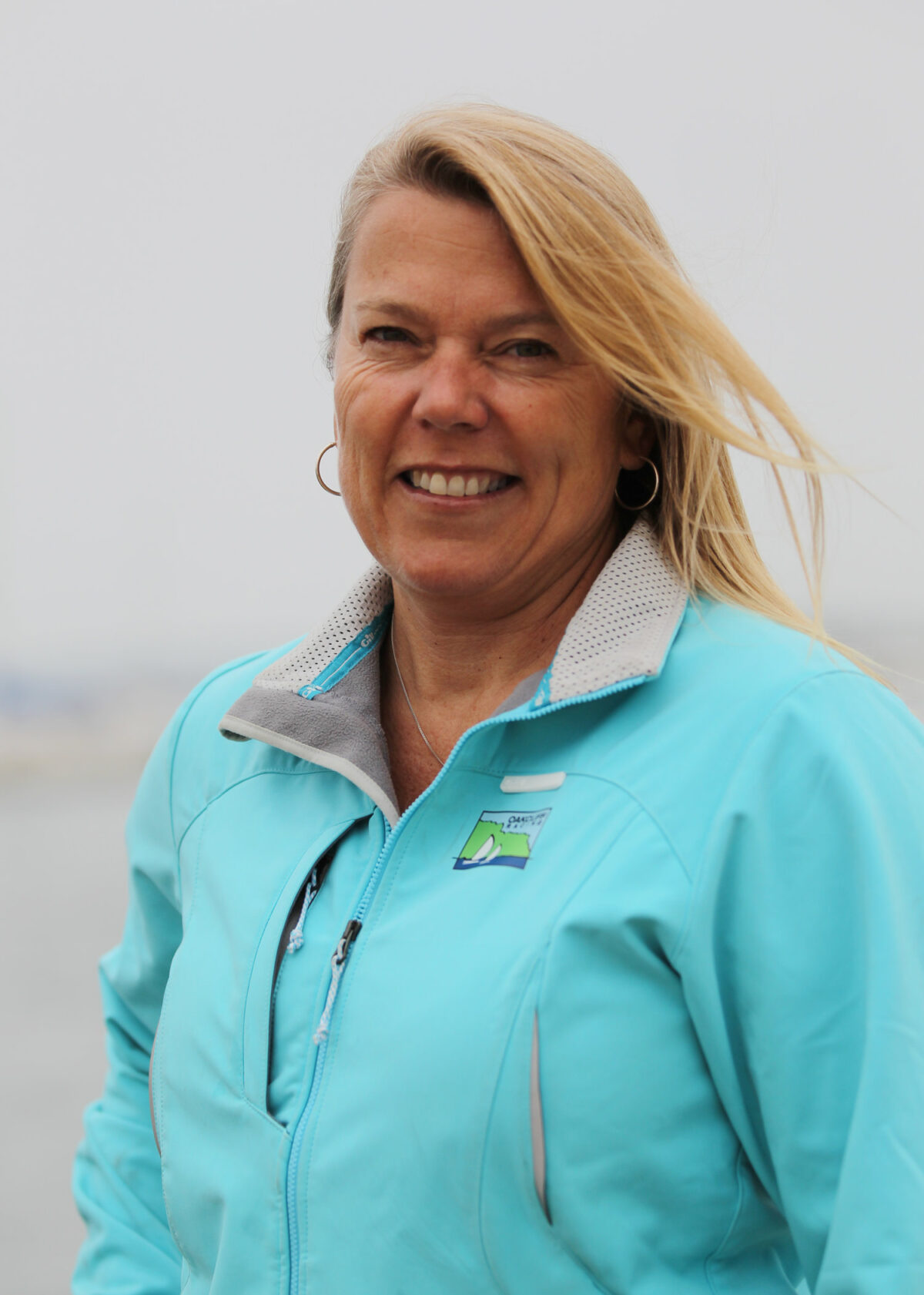
Dawn Riley and Oakcliff Sailing: 2018

Mystic Seaport Museum presented its 2018 America and the Sea Award to Dawn Riley and Oakcliff Sailing. The prestigious award recognizes those individuals and organizations whose extraordinary achievements in the world of maritime exploration, competition, scholarship, and design best exemplify the American character.

Riley stands alone as the first woman to compete in both the America’s Cup and in the Whitbread Round the World Race, two of the pinnacles in the sport of sailing that prior to her had been all but closed to women sailors. Riley also went on to become the first American, male or female, to sail in three America’s Cups and two Whitbread Round the World Races.

Mystic Seaport Museum President Steve White remarked, “Dawn Riley’s impact on international sailing speaks for itself, and this award gives the Museum the opportunity to call greater attention to the extraordinary accomplishments of this courageous woman.”

Riley trains premier-level American sailors for future Olympic, America’s Cup, and other world-class level sailing competitions, and leads a movement to reinvigorate the sport in this country. One nexus of this movement is Oakcliff Sailing Center in Oyster Bay, N.Y., where Dawn serves as Executive Director. A high-performance training center for sailors who have progressed beyond traditional coaching methods, Oakcliff’s vision is to “Build American Leaders through Sailing.” Riley’s leadership and the quality of the programs she oversees were recognized recently by New York Yacht Club’s American Magic, which is currently preparing a challenge for the 36th America’s Cup. This syndicate is partnering with Oakcliff to recruit and train members for their America’s Cup Team.

Riley pursued an impressive racing career on the water punctuated by unprecedented accomplishments such as her role as the watch captain/engineer on Maiden, the first all-women’s team in the 1989-90 Whitbread Round the World Race; pit person for America3, winner of the 1992 America’s Cup and first woman to have an active role on an America’s Cup team; skipper of Heineken, the only all-women’s entry in the 1993-94 Whitbread Race; team captain of America3, the women’s team in the 1995 America’s Cup; 1999 US Sailing’s Rolex Yachtswoman of the Year; America True CEO and Captain in the 2000 America’s Cup; and winning skipper at the 2002 IC45 World Championships.

A black tie gala was held in honor of Riley and Oakcliff Sailing in New York City Wednesday, October 3, 2018. This affair is the premier fund raising event for Mystic Seaport Museum. Past recipients of the America and the Sea Award include philanthropist and environmentalist David Rockefeller, Jr. ; oceanographer and explorer Sylvia Earle; historian David McCullough; legendary yacht designer Olin Stephens; President and CEO of Crowley Maritime Corporation, Thomas Crowley;  philanthropist William Koch; former Secretary of the Navy John Lehman; WoodenBoat Publications founder Jon Wilson; yachtsman and author Gary Jobson; maritime industrialist Charles A. Robertson; author Nathaniel Philbrick; and Rod and Bob Johnstone and their company J/Boats.

We sincerely thank the following sponsors:

Platinum
William I. Koch
Betsy and Hunt Lawrence

Gold
Peggy and Grant Cambridge
J. Barclay Collins, II
Gowrie Group
Travelers

Silver
Irene and Charles Hamm
KPMG
Joanne and Michael T. Masin
Cayre and Alexis Michas
The Northern Trust Company

… and our 12 Bronze sponsors.


Categories
America and the Sea Award

David Rockefeller Jr. and Sailors for the Sea: 2017

“We are proud to recognize the tremendous contribution David Rockefeller Jr. and Sailors for the Sea have made to educate and activate the maritime community in the goal of conserving and protecting the health of our oceans.  By forging a connection between boaters and ways in which they can help conserve the environment, they inspire all of us to take better care of the world in which we live,” said Steve White, president of Mystic Seaport.

David Rockefeller Jr., Chairman of Rockefeller & Co., is an active participant in the nonprofit arena, especially in the areas of the environment, the arts and philanthropy.  He served as a member of the Pew Oceans Commission from 2000-2003, and he founded Sailors for the Sea to educate the recreational boating community about significant challenges to ocean health and to motivate them to become ocean stewards. Sailors for the Sea is located in Newport, RI, with satellite offices in Japan, Portugal, and Chile.“Sailors for the Sea and I are incredibly honored to join the illustrious roster of America and the Sea Award recipients. Through this opportunity we look forward to fostering an even deeper collegial relationship with Mystic Seaport, broadening the scope and outreach of both organizations. It paves the way for our two organizations to collaborate more directly on projects that serve our shared ideals, and raise awareness of the issues both organizations hold dear, our maritime past and present and the future vitality of our oceans,” said Rockefeller.
Rockefeller is a Trustee of the Museum of Modern Art, the Asian Cultural Council and the David Rockefeller Fund.  He is a fellow of the American Academy of Arts and Sciences and a member of the Council on Foreign Relations.

Former foundation affiliations include service as Trustee and Chairman of the Rockefeller Foundation and the Rockefeller Brothers Fund, President of the Rockefeller Family Fund and Director of the Boston Foundation.  He is the former chair of the North American Nominating Committee for the Praemium Imperiale, the Japanese prize for outstanding international achievement in the arts.

He is a graduate of Harvard College and Harvard Law School and is married to Susan Cohn Rockefeller, an artist and filmmaker.

Search